PyAFV



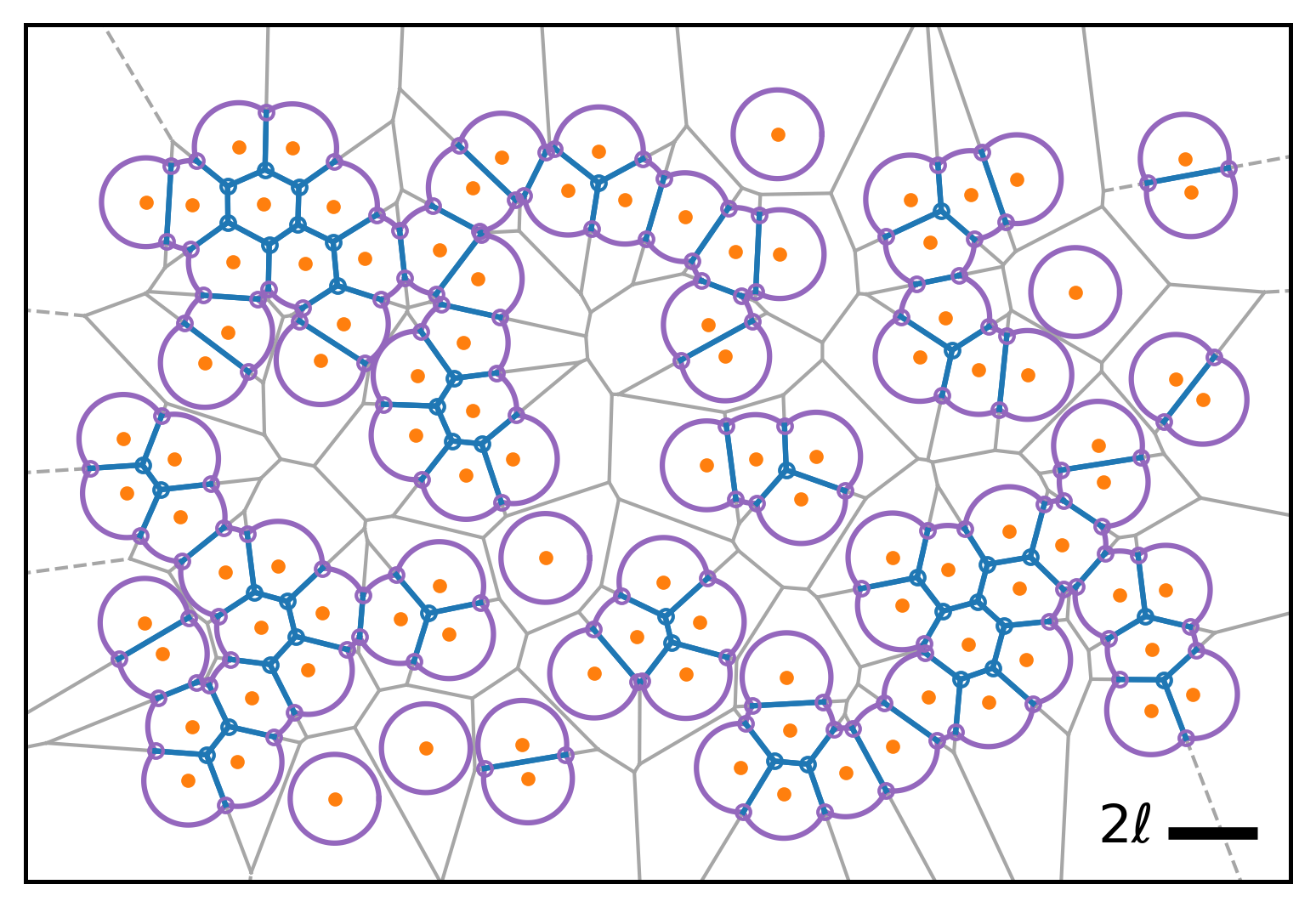
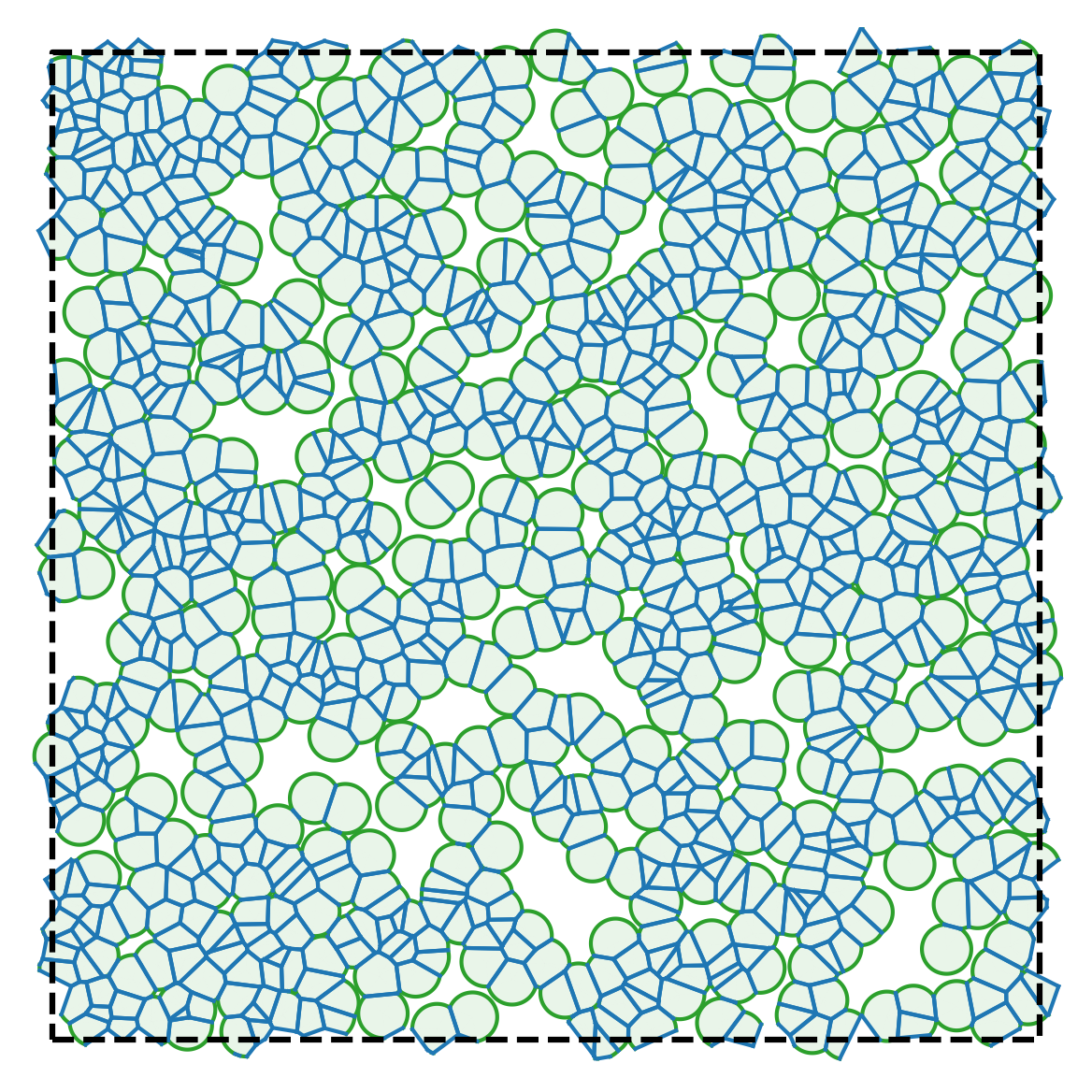
PyAFV is a Python implementation of the active-finite-Voronoi (AFV) model in 2D.
The AFV framework was introduced and developed in, for example, Refs. [1, 2, 3].
Check out the Getting started, Examples, Performance, Contributing to PyAFV, and API reference sections for further information, including how to install the package, usage examples, benchmarks, local development, and the complete API reference.
Note
For the latest updates, see the GitHub repository.
Contents
Caution
Future versions may introduce changes to features and APIs.
References
J. Huang, H. Levine, and D. Bi. Bridging the gap between collective motility and epithelial–mesenchymal transitions through the active finite voronoi model. Soft Matter, 19(48):9389–9398, 2023. doi:10.1039/D3SM00327B.
E. Teomy, D. A. Kessler, and H. Levine. Confluent and nonconfluent phases in a model of cell tissue. Phys. Rev. E, 98:042418, Oct 2018. doi:10.1103/PhysRevE.98.042418.
W. Wang and B. A. Camley. Divergence of detachment forces in the finite-voronoi model, manuscript in preparation. manuscript in preparation, 2026.
J.-Q. Lv, P.-C. Chen, Y.-P. Chen, H.-Y. Liu, S.-D. Wang, J. Bai, C.-L. Lv, Y. Li, Y. Shao, X.-Q. Feng, and B. Li. Active hole formation in epithelioid tissues. Nature Physics, 20(8):1313–1323, 2024. doi:10.1038/s41567-024-02504-1.
Indices